
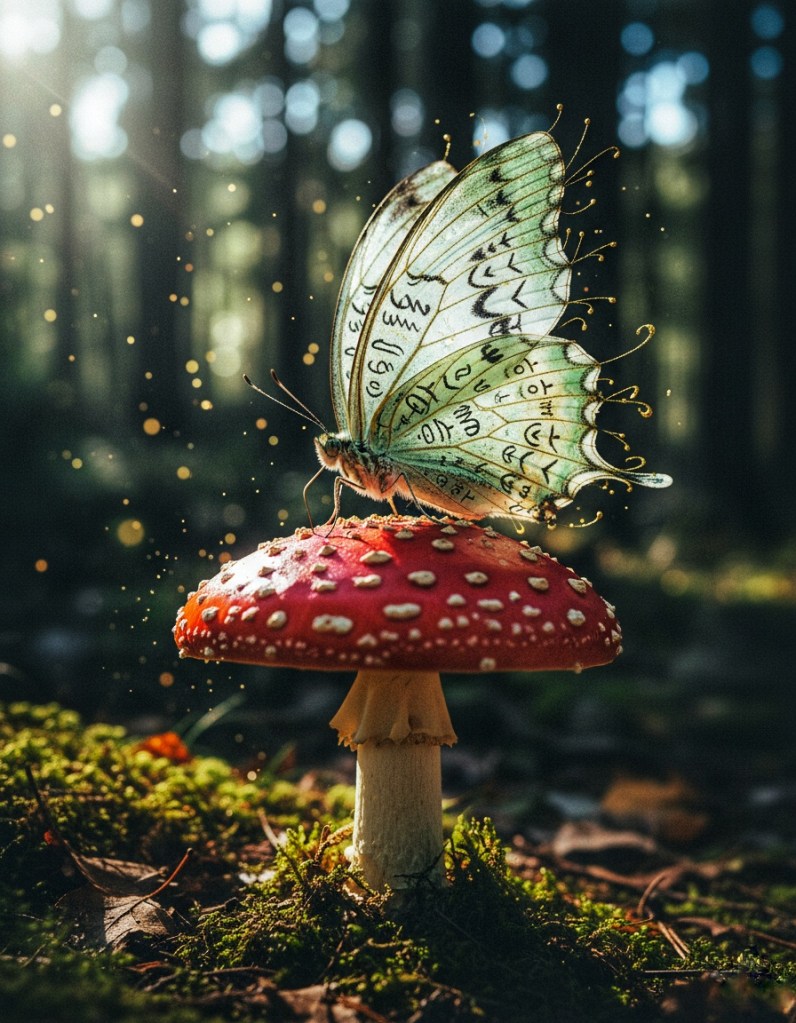
Deep within the Whispering Woods, where ancient trees whisper secrets to the wind and sunlight dances upon the mossy floor, the Forest Folk goblins have long held a unique connection to the realm of dreams and magic. It is said that they possess the ability to communicate with the spirits of the forest, to weave enchantments into the very fabric of nature, and to traverse the hidden pathways that connect the physical world to the ethereal realms.
To record their knowledge, their rituals, and their dreams, the Forest Folk developed a script as delicate and whimsical as a butterfly’s wing – the Faewilder Script. This ancient written language, passed down through generations of goblin storytellers and mystics, is more than just a collection of symbols; it’s a gateway to the hidden magic of the Whispering Woods.
The Essence of Faewilder Script
The characters of Faewilder Script are a reflection of the natural world, their forms echoing the gentle curves of flower petals, the flowing lines of a spider’s silk, and the intricate patterns of moonlight dancing on dewdrops. Each symbol holds a deeper meaning, representing not just a sound or a word, but also an element of nature, a whisper of the wind, or a fleeting moment of beauty captured in ink.
Unlike the rigid structures of human languages, Faewilder Script flows with an organic grace, its characters intertwining and evolving like the forest itself. It is a language that speaks to the heart and the imagination, inviting those who gaze upon it to delve deeper into its mysteries and uncover the hidden wisdom it holds.
Learning the Language of the Woods
The beauty of Faewilder Script lies not only in its aesthetic appeal but also in its simplicity. It is based on a letter-for-letter substitution of the English alphabet, making it accessible to those eager to learn its secrets. However, there’s a unique twist that sets it apart: words are not separated by spaces; instead, they flow continuously, line after line, only ending when the page runs out. This creates a visual tapestry of words, mirroring the interconnectedness of the forest and the goblin’s holistic worldview.
To begin your journey into Faewilder Script, consult the chart below, where each English letter is paired with its corresponding goblin symbol. Practice tracing the symbols, familiarize yourself with their shapes, and soon, you’ll be weaving your own enchanting messages.

Uses of Faewilder Script
Recording Dreams and Visions: Forest Folk goblins often use Faewilder Script to record their dreams and visions, believing that the act of writing can capture the ephemeral essence of the dream world and preserve its delicate magic. They fill their journals with intricate symbols, creating a visual representation of their nocturnal adventures and the messages they receive from the spirit realm.
Crafting Spells and Charms: The flowing lines and graceful curves of Faewilder Script are often woven into spells and charms, their magical properties amplified by the script’s connection to the forest’s gentle energy. Goblins believe that by inscribing these symbols onto stones, leaves, or even their own skin, they can harness the power of nature and manifest their intentions.
Communicating with Spirits: Some goblins believe that Faewilder Script can be used to communicate with the spirits of the forest, its symbols acting as a bridge between the physical and ethereal realms, allowing for a harmonious exchange of whispers and intentions. They might leave messages written in Faewilder Script at the base of ancient trees or beside sacred springs, hoping to receive guidance or blessings from the spirits.
Marking Sacred Places: The Forest Folk often use Faewilder Script to mark sacred places within the Whispering Woods, such as ancient groves, hidden springs, or the entrances to fae realms. These delicate inscriptions, barely visible to the untrained eye, serve as a reminder of the hidden magic that permeates the forest and the importance of respecting its delicate balance.
The Legend of the First Scribe
Legend has it that the first goblin to master Faewilder Script was a young mystic named Whisper. Whisper, with their deep connection to the forest and their ability to hear the whispers of the trees, spent years wandering the woods, observing the delicate dance of nature and attuning their senses to the subtle energies that flowed through the leaves and streams.
One night, under the glow of the full moon, Whisper had a vision. They saw a shimmering butterfly, its wings adorned with intricate patterns that shifted and changed like the dreams that danced in their mind. As they reached out to touch the butterfly, its wings dissolved into a shower of silver dust, each particle forming a delicate symbol that floated upon the breeze.
Whisper, captivated by the beauty and mystery of these symbols, carefully gathered them and transcribed them onto a smooth piece of birch bark, creating the first iteration of Faewilder Script. With this newfound language, Whisper was able to record their dreams, communicate with the spirits of the forest, and weave powerful enchantments into their creations. They shared their knowledge with their fellow goblins, and Faewilder Script became an integral part of Forest Folk culture, a testament to their connection to the natural world and the delicate magic that lies within.
Faewilder Script is more than just a written language; it’s a reflection of the Forest Folk goblins’ deep connection to nature, their artistic spirit, and their reverence for the mystical realm. It’s a language that whispers of dreams, magic, and the hidden wonders of the Whispering Woods.
Have you ever used secret scripts or languages in your own world? Share your creations in the comments below!
Explore more about goblincore and the magic of the Whispering Woods on our blog!


 Goblin Living
Leave a comment